
Tattooing.nz, a directory for discovering tattoo studios and artists in New Zealand.
Summary: Tattooing.nz is an independent directory that helps people discover tattoo studios and artists across New Zealand. I initiated, designed and built the website in Wix, drawing on my experience as a graphic designer and tattoo artist.
My role: I independently took tattooing.nz from the initial idea to a live website. My responsibilities included user interviews and analysis, branding and visual identity, website structure, interface design, and building the website in Wix.
I also researched studios across New Zealand, compiled and organised the directory data, wrote website content and educational articles, and managed the launch and ongoing updates.
Project dates: October-November 2026
Website link: tattooing.nz
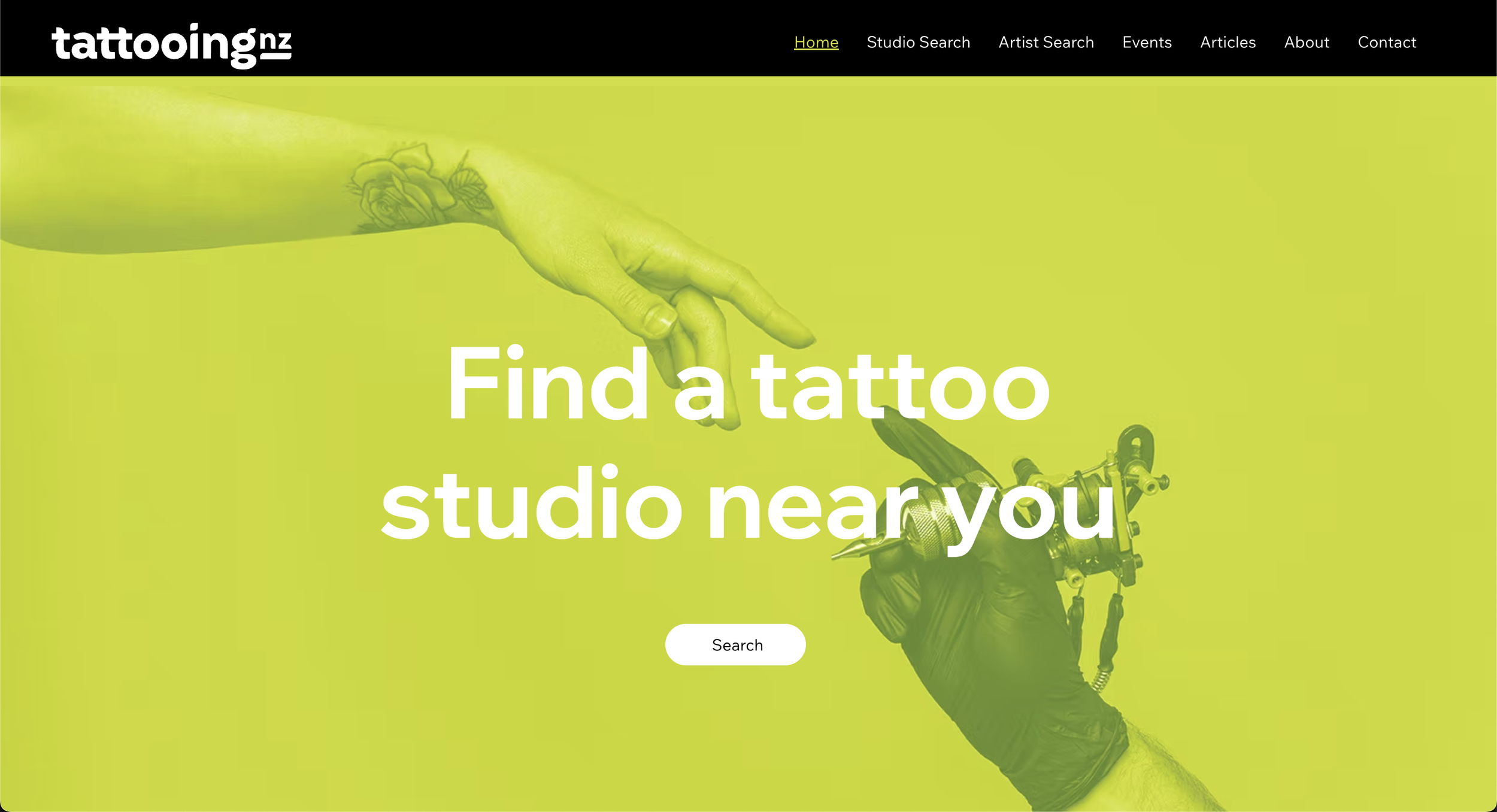
Background and problem
My background in graphic design introduced me to organisations and websites where designers could connect, share their work and discover studios. When I began working in tattooing, I noticed a need for a similar shared resource.
My academic experience in psychology also shaped my approach. Research taught me to look for gaps, ask questions and consider how existing knowledge could address a problem. I applied that thinking to the tattoo industry, where I saw an opportunity to bring information about studios and artists together.
In informal conversations, my clients often described finding a tattoo artist as difficult. They commonly relied on personal recommendations, Instagram or Google searches for individual studios. These conversations prompted me to create tattooing.nz, a directory where people could explore studios and artists in one place, starting with their location.
The problem
People looking for a tattoo often search across separate studio websites, social media accounts and personal recommendations. This can make it difficult to see which options are available and decide where to enquire.
The project goal
Create a central place where people can discover tattoo studios and artists by location, explore their options and find information to help them take the next step.
Early response
After launching the website, I received positive feedback from tattoo artists and studios, some of whom began submitting their details for inclusion. This provided an early sign of interest from the industry. Further testing is needed to understand whether the website makes finding a suitable studio or artist easier for clients.
Main research findings
1. Finding an artist involved searching across several platforms
Visitors described using Google, Instagram, Pinterest and studio websites to explore their options. They used images to discover styles and assess artists’ work. Some did not know the terminology for the tattoo they wanted, so visual examples helped them communicate their preferences.
2. Choosing an artist involved more than location
Two visitors valued a convenient location. Another was willing to travel further to an artist whose style and approach suited her. Artist biographies, studio photographs and welcoming communication also helped visitors feel comfortable with their choice.
3. Some visitors needed guidance before making an enquiry
One visitor found it difficult to communicate their idea. Another felt that booking processes expected clients to know the design, size and placement before contacting the artist. These experiences suggested a need for guidance that supports people who are still developing their ideas.
4. Artists spent time managing visibility and enquiries
Artists described relying on Instagram and personal recommendations to reach clients. They reported pressure to post regularly and time spent on administration. The group interview also highlighted repeated messages needed to clarify clients’ preferred size, placement and style.
Searching across platforms
“I searched on Google and Instagram, including lists of reviewed tattoo artists.”
Visitor 2
Using images without knowing style terminology
“I wanted fine line peonies, but did not know yet how to describe it, so I was looking at the examples I liked.”
Visitor 1
Choosing an artist beyond location
“Location was a little out of the way for me (there were closer studios) but that wasn't important in my search.”
Visitor 2
Needing guidance before enquiring
“A lot of the booking process seemed to be about knowing exactly what you wanted, where, how big and I kinda needed a bit more guidance.”
Visitor 3
Design goals
1. Bring information together. Create a central directory where visitors can discover tattoo studios and artists, with links to their websites and social accounts.
2. Support searches by location. Help visitors find studios and artists in areas that suit them.
3. Help visitors explore artistic styles. Include style filters and examples of artists’ work to support people who may not know how to describe their preferred style.
4. Provide guidance before an enquiry. Explain what information artists need, while reassuring visitors that they can ask for help when their idea is still developing.
5. Support artist participation. Give artists a way to submit their details and make their work discoverable through an additional channel.
Website structure and user journeys
User goal:
Find a nearby studio
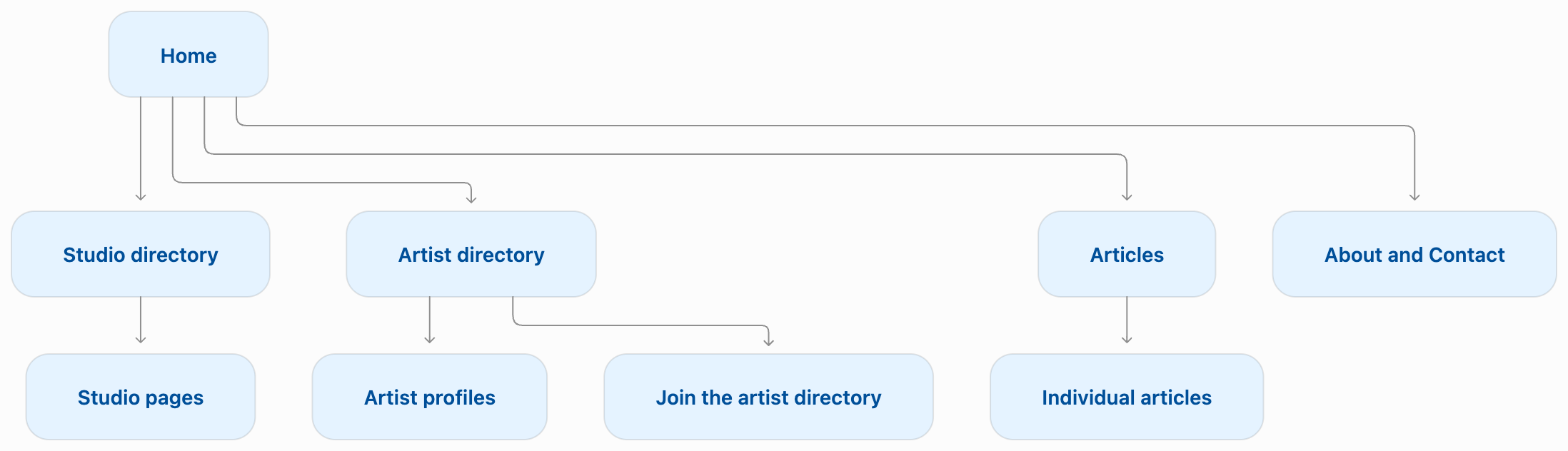
I organised tattooing.nz around two main tasks: finding a tattoo studio and finding a tattoo artist. Separate directories support these searches. Articles provide additional guidance, while artist submissions allow artists to put themselves forward for inclusion.
User goal:
Explore a suitable artist
Journey
Open studio directory → select location filters → review matching listings → open a studio page → find contact information or follow a website link
Journey
Open artist directory → select relevant filters → review matching artists → open an artist profile → explore their work and contact options
Designing and building the website
Finding studios by location
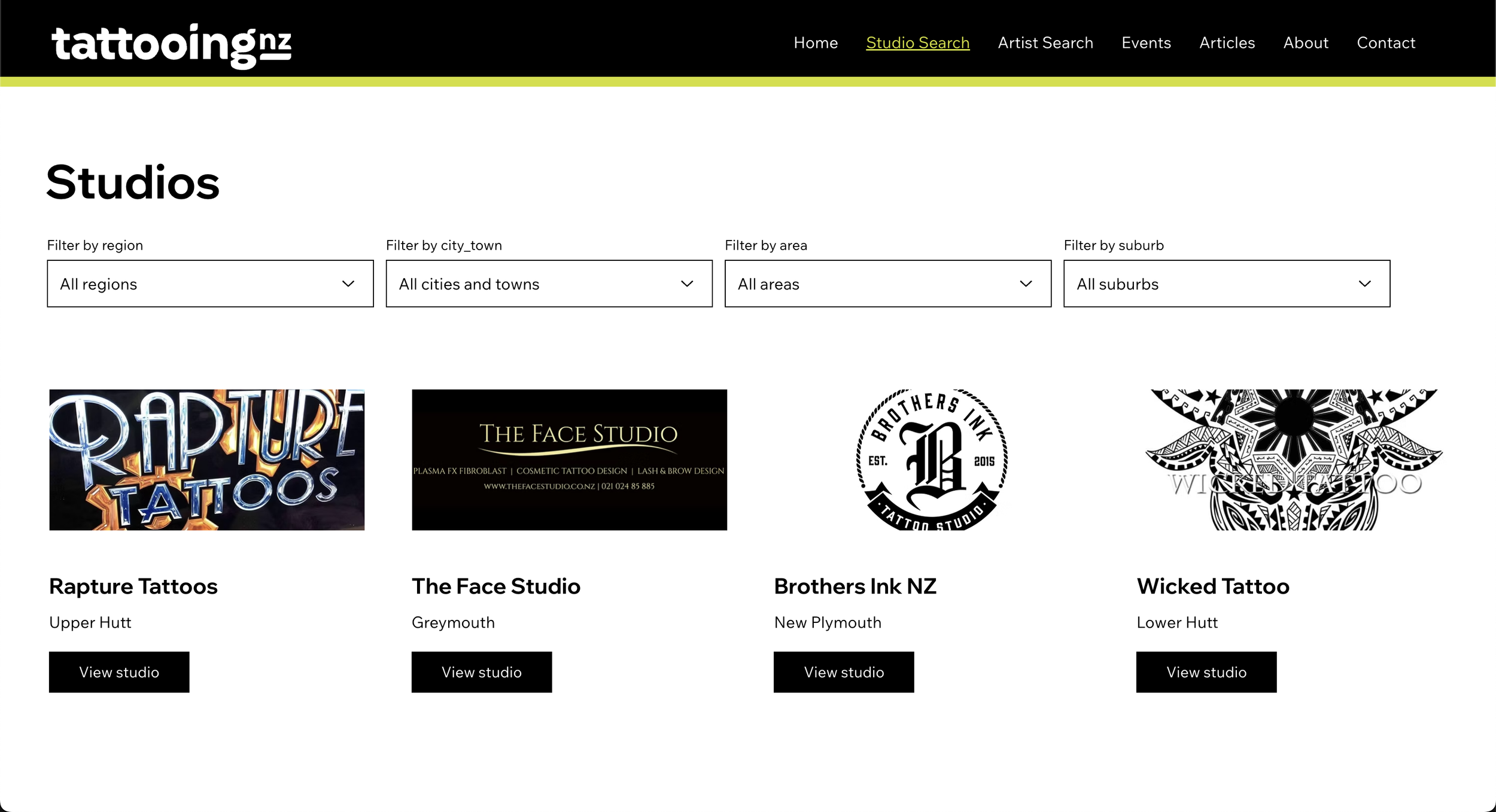
Location was important to some interview participants. I created a studio directory with location filters to help visitors explore options in a suitable area. Each listing links to a separate studio page with further information and contact details.
To test: Can visitors find a studio in their preferred area? Are the location categories clear, particularly for smaller towns?
Exploring artists by style
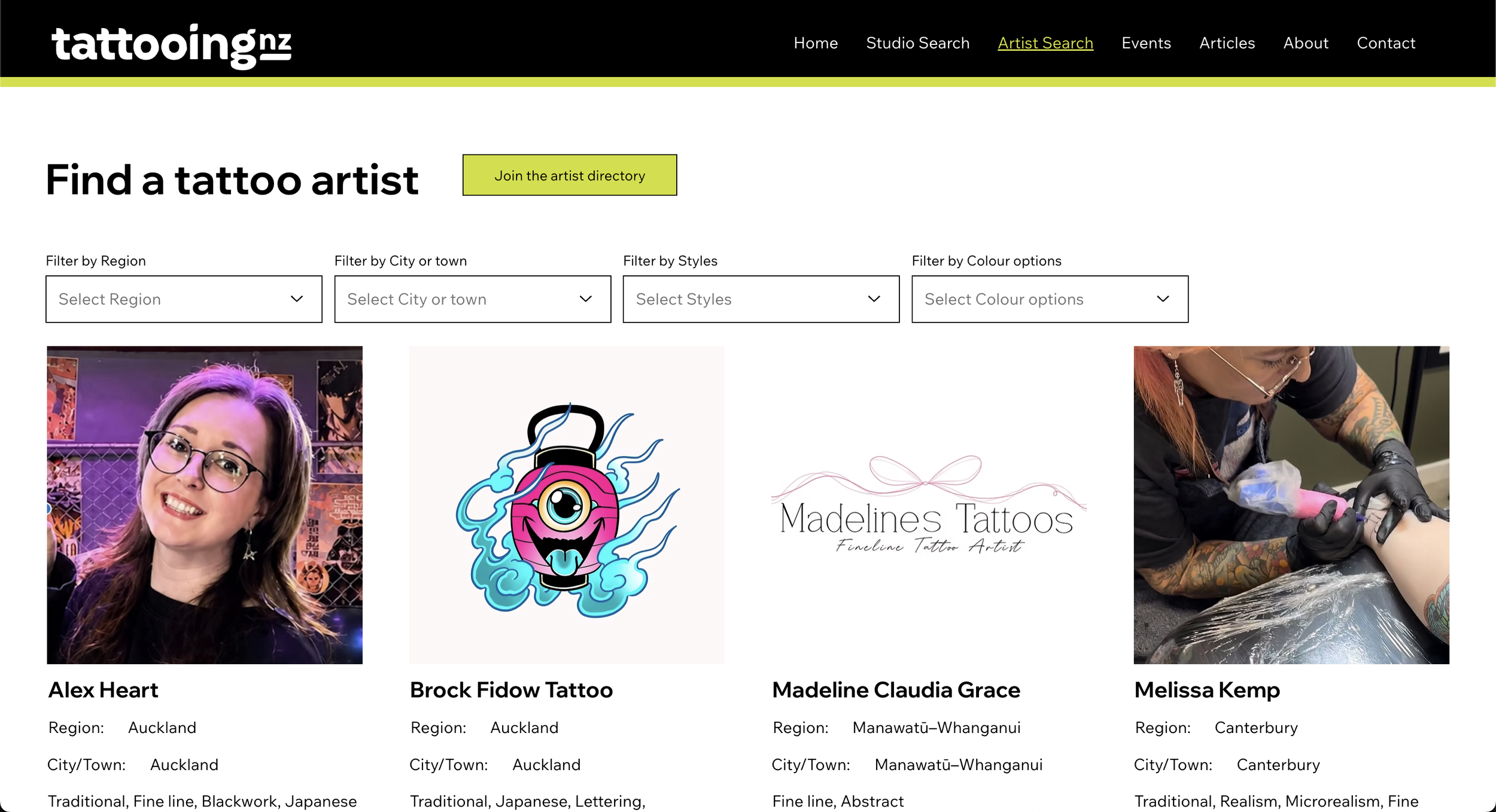
Visitors used portfolios to decide whether an artist’s work suited their idea. I created an artist directory with location, style and colour filters, supported by visual examples of artists’ work.
To test: Do visitors understand the style labels? Can they find relevant artists, including when they are unsure which style to choose?
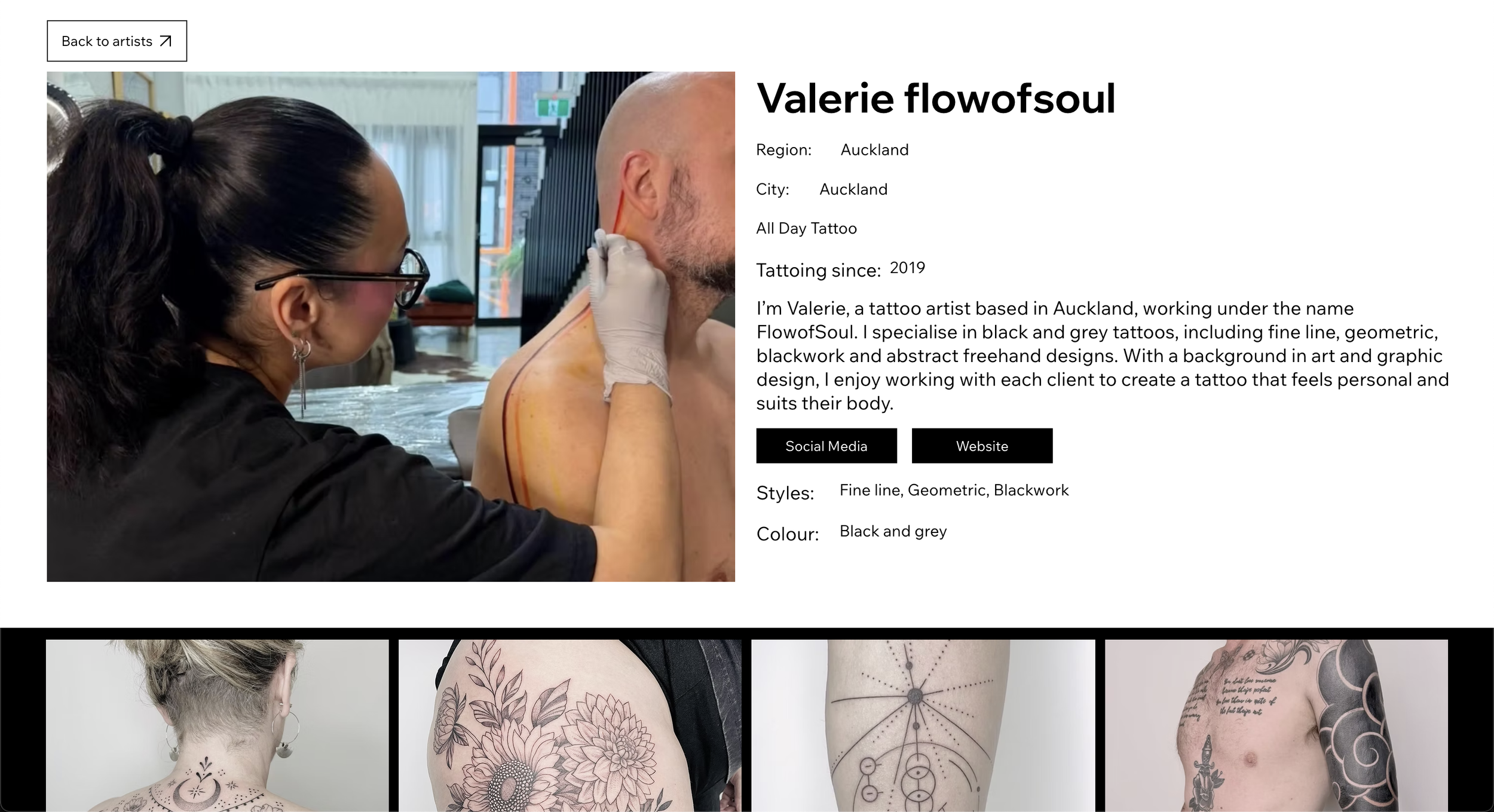
Getting to know an artist
The interviews showed that personal comfort also influenced artist selection. Individual profiles bring together information about an artist, examples of their work and contact options, helping visitors consider whom to approach.
To test: Does the profile provide enough information for visitors to decide whether to contact the artist? What information is missing?
Preparing for the first enquiry
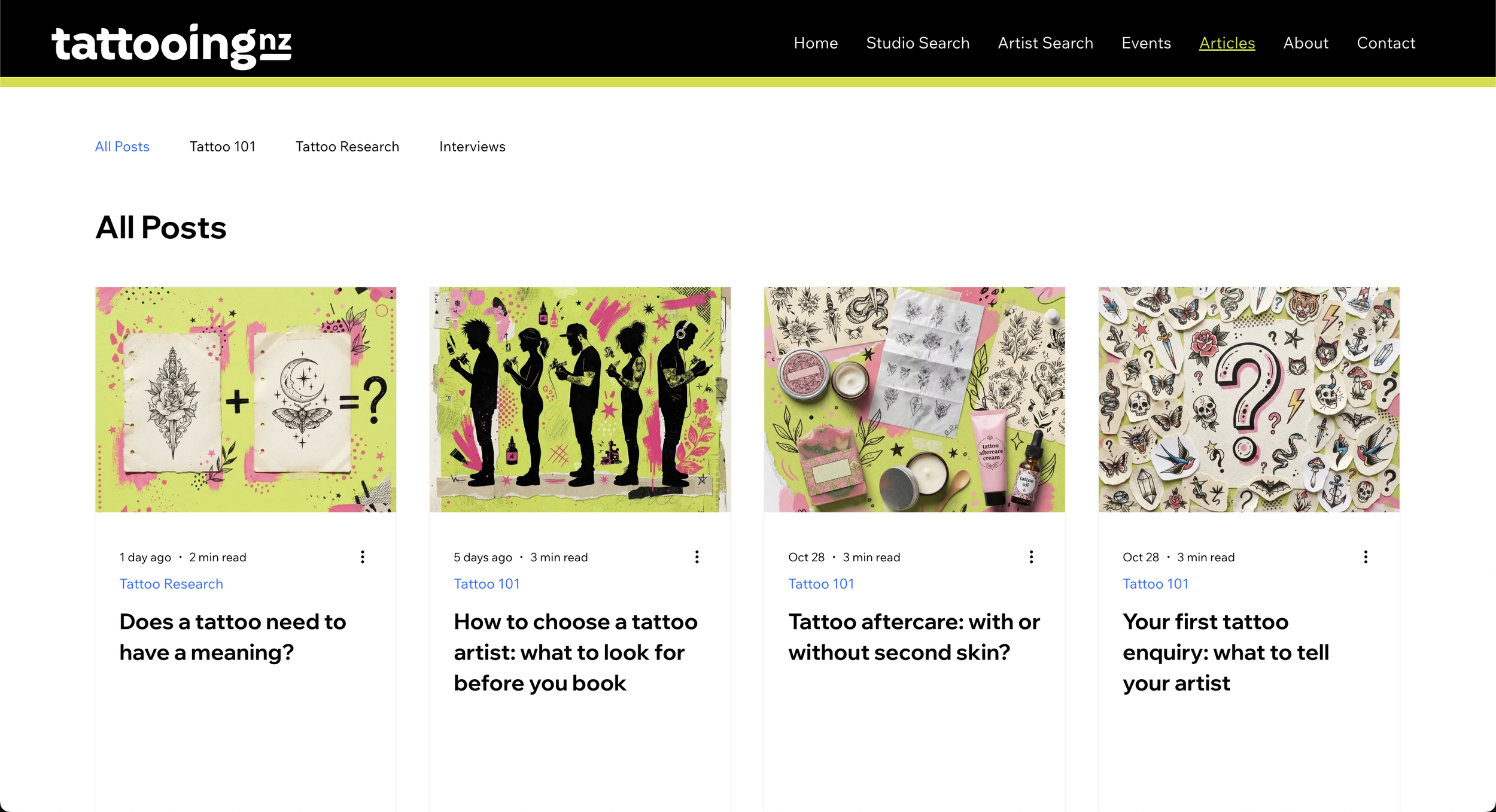
Some visitors needed guidance when explaining their ideas. Artists also described repeated messages to clarify size, placement and style. I added educational articles, including an enquiry guide, to help visitors understand what information to prepare.
To test: After reading the guide, can visitors prepare an enquiry? Does it support people who have not yet decided exactly what they want?
Joining the directory
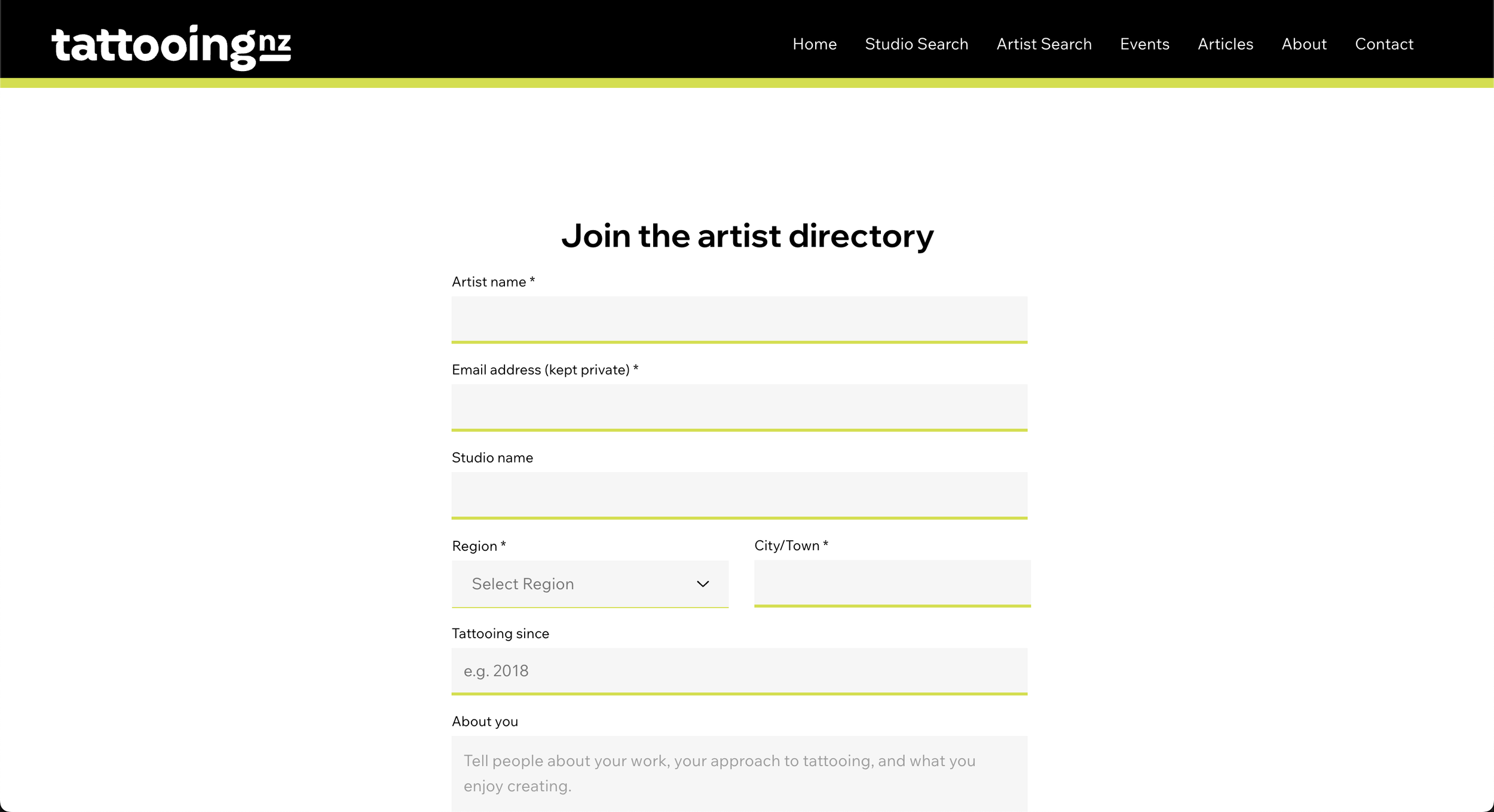
Artists described the effort involved in maintaining their online visibility. I included a submission form so artists could put themselves forward for inclusion and provide their listing information.
To test: Can artists find the form and complete it without help? Are the requested information and submission process clear?
Evaluation and early response
Early industry response
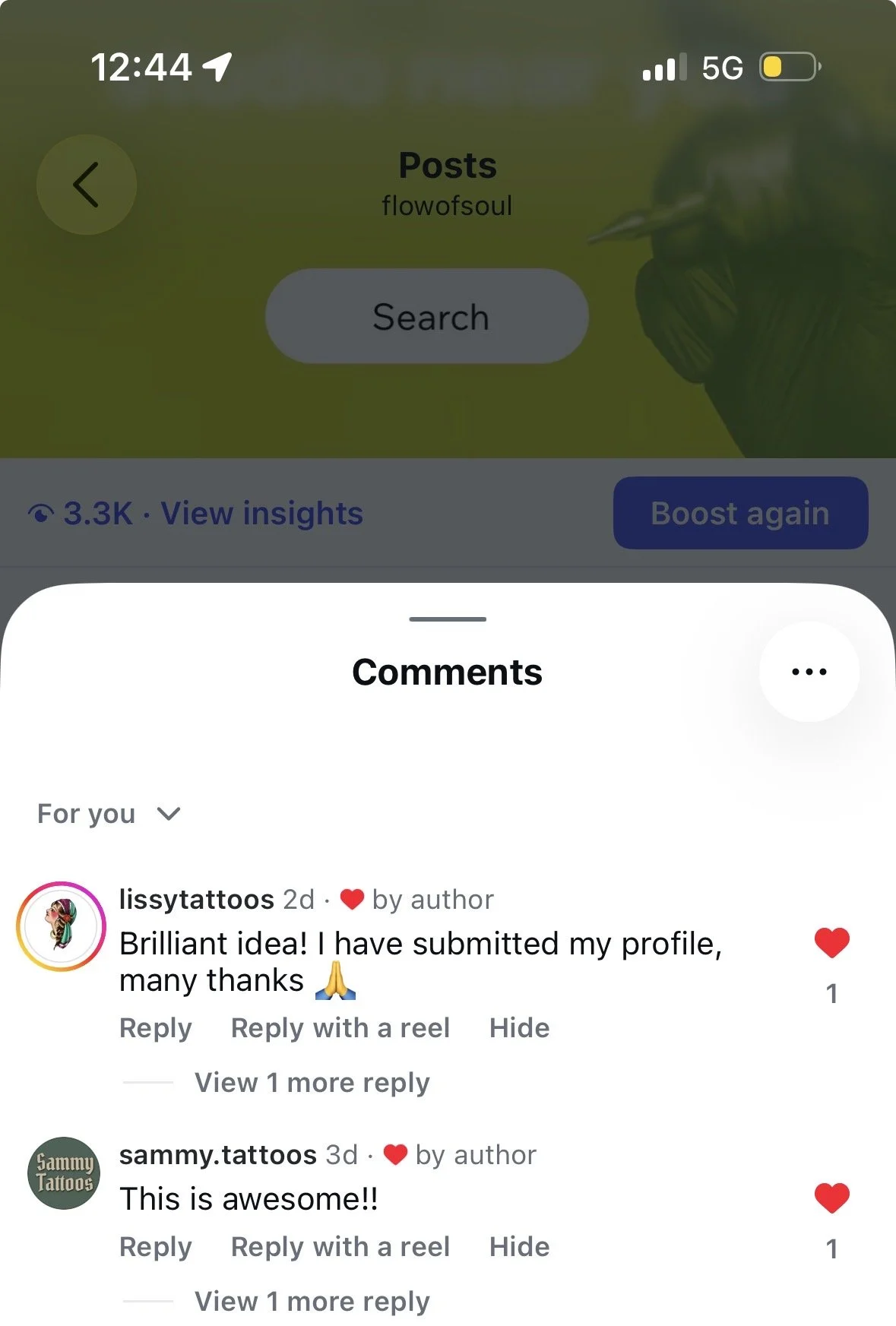
After launching tattooing.nz, I received positive feedback from tattoo artists and studios. Several artists completed the submission form, and their profiles are now published on the website. This shows early industry interest and confirms that the submission process has supported real participation.
Supporting evidence: Examples of published profiles and anonymised feedback.
Usability evaluation
Formal usability testing has not yet been completed. Artist submissions provide evidence that some artists could complete the joining process, but I have not yet evaluated how easy they found it.
My next priority is to evaluate the directory filters. I want to understand whether visitors can find relevant studios and artists, whether the location and style labels are clear, and how well the filters support searches in both larger cities and smaller towns.
I will observe visitors completing these tasks and use the findings to decide which changes to prioritise.
Reflection and next steps
What I learnt
Researching both visitors and artists helped me understand the experience from two perspectives. Visitors needed support finding and choosing an artist. Artists needed ways to be discovered and to help clients prepare useful enquiries.
The interviews also showed that people approach tattoo searches differently. Some prioritise location, while others place greater importance on style or feeling comfortable with an artist. This reinforced the need to support different ways of exploring the directory.
Design challenges
Organising location information raised questions about the level of detail visitors need. Area and suburb filters may help people searching in Auckland, but offer less value in smaller towns with fewer studios. I identified this limitation but have not yet changed the filters.
Style categories presented another challenge. Visitors may recognise work they like without knowing its name. Style filters therefore need to work alongside visual examples.
Limitations
My research involved a small sample drawn from my clients and professional network. Their experiences informed the design, but may not reflect the needs of a wider audience.
Positive feedback and artist submissions indicate industry interest. Formal usability testing is still needed to assess how well the website supports visitors’ tasks.
Next steps
I plan to test whether visitors can find a studio, identify a suitable artist and locate contact information. Testing will include searches in both larger cities and smaller towns, alongside searches by people who are unsure of tattoo style terminology.
I will use the findings to prioritise changes to filter labels and behaviour, profile information and navigation. My first priority will be difficulties that prevent visitors from finding relevant options or contacting an artist.